
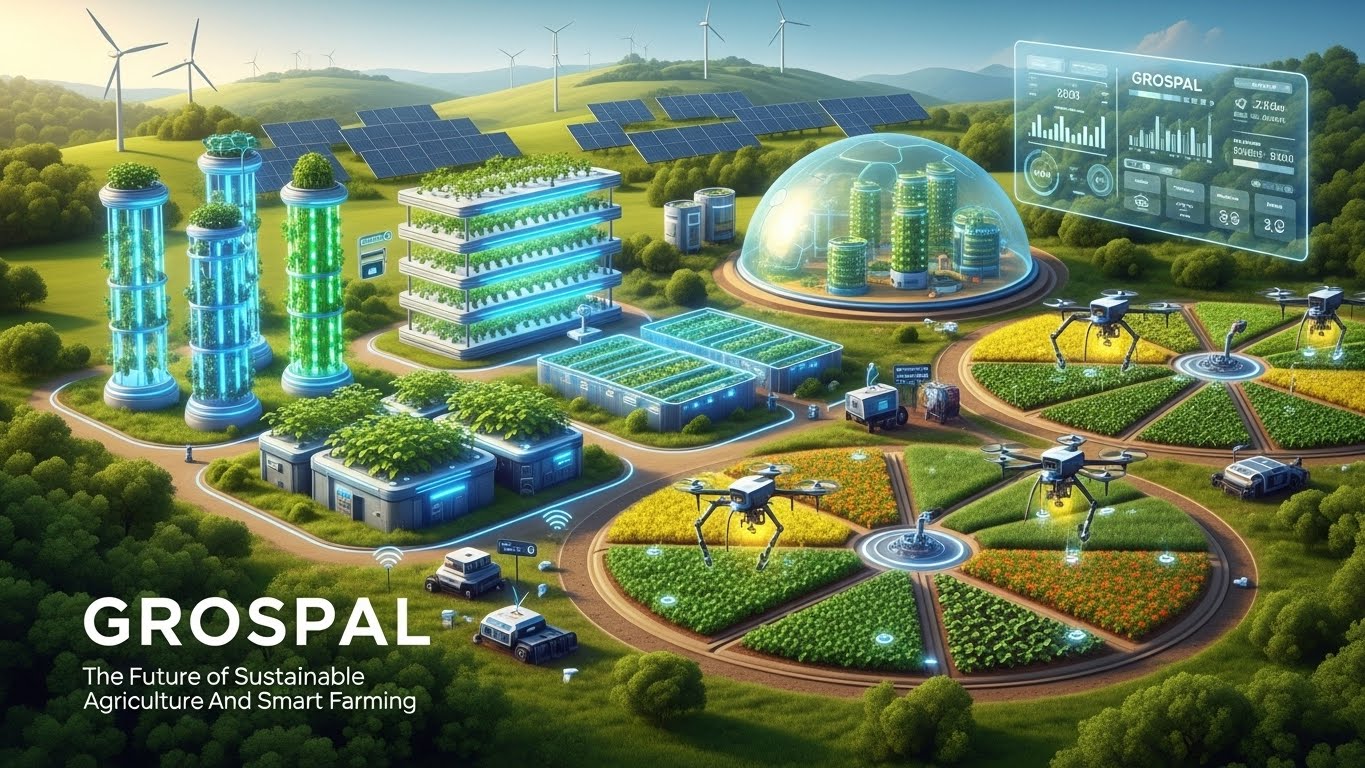

In a world where food security and environmental sustainability are becoming increasingly urgent, Grospal emerges as a beacon of hope. This innovative platform is reshaping the landscape of agriculture by integrating cutting-edge technology with eco-friendly practices. Farmers everywhere are beginning to realize that there’s more to farming than just planting seeds and waiting for rain. With Grospal’s approach, sustainable agriculture meets smart farming in an exciting fusion aimed at solving some of the most pressing challenges faced today. Join us on this journey into the future of farming, where tradition blends seamlessly with innovation, ensuring healthier crops and a greener planet for generations to come.
The Problems with Traditional Farming Methods
Traditional farming methods often rely heavily on chemical fertilizers and pesticides. This can lead to soil degradation over time. Nutrient-rich soils are essential for healthy crops, but many farmers deplete their land without realizing the long-term consequences.
Water usage is another critical issue. Conventional agriculture frequently involves excessive irrigation, which strains local water supplies. In regions facing droughts, this practice can exacerbate existing challenges. Pest control in traditional methods also poses a problem. While chemicals may provide short-term solutions, they disrupt ecosystems and harm beneficial insects. Biodiversity suffers as a result.
Moreover, the carbon footprint of conventional farming practices is substantial. From fuel consumption during planting to transportation of goods, each step contributes to greenhouse gas emissions. These issues highlight an urgent need for innovation in agriculture that prioritizes sustainability while maximizing yield potential.
The Benefits of Sustainable Agriculture and Smart Farming
Sustainable agriculture and smart farming bring a wealth of advantages to modern food production. These methods prioritize environmental health, focusing on practices that reduce soil degradation and conserve water. This shift helps in maintaining biodiversity while promoting healthier ecosystems.
Farmers adopting these techniques often experience increased efficiency through precision farming tools. Technologies such as drones and IoT devices allow for real-time monitoring of crops, leading to better resource management.
Additionally, sustainable agriculture can enhance crop resilience against pests and climate variability. Healthier soils lead to more robust plants that require fewer chemical inputs. Consumers also benefit from this approach. They gain access to fresher, chemical-free produce while supporting local economies. As awareness grows around the importance of sustainability, demand for responsibly sourced products continues to rise.
How Grospal Incorporates Technology into Farming
Grospal embraces cutting-edge technology to revolutionize farming practices. Utilizing IoT devices, farmers can monitor soil moisture and nutrient levels in real time. This data-driven approach allows for precise irrigation and fertilization.
Drones play a significant role as well. They survey fields quickly, identifying problem areas that need attention. The aerial views help optimize planting patterns and crop health assessments. Artificial intelligence is another key player in Grospal’s strategy. Machine learning algorithms analyze vast amounts of agricultural data to predict yields and suggest improvements. Farmers gain insights that were previously unattainable.
Moreover, Grospal promotes the use of automated machinery for tasks like planting and harvesting. These innovations reduce labor costs while increasing efficiency on the farm. By integrating these technologies, Grospal empowers farmers to make informed decisions that enhance productivity without compromising sustainability.
Success Stories from Farmers Using Grospal
Farmers across the globe are sharing inspiring success stories with Grospal. These narratives highlight how innovative strategies transformed their agricultural practices. Take, for instance, a small farm in California. Utilizing Grospal’s smart farming solutions, they increased crop yields by 30% within a season. The integration of data analytics allowed them to optimize water usage and reduce waste significantly.
In Brazil, another farmer switched to Grospal’s sustainable techniques and saw his soil health improve dramatically. This shift not only enhanced productivity but also restored local biodiversity on his land. A dairy farmer in France adopted Grospal’s precision agriculture tools. He managed to decrease feed costs while improving milk quality—all thanks to real-time monitoring capabilities.
These examples illustrate that embracing modern technology can yield remarkable results in farming today. Each success story reinforces the potential of Grospal in shaping a more sustainable agricultural future.
The Environmental Impact of Sustainable Agriculture
Sustainable agriculture significantly reduces the carbon footprint associated with traditional farming. By utilizing methods like crop rotation and organic fertilizers, it decreases reliance on chemical inputs that harm ecosystems.
Soil health improves as sustainable practices enhance biodiversity. Healthier soil retains moisture better, which is crucial in combating drought conditions. This leads to increased resilience against extreme weather changes. Water conservation becomes a natural outcome of smart farming techniques. Precision irrigation systems optimize water usage, ensuring crops receive just what they need without wastage.
Moreover, sustainable farms often promote local food systems. This not only supports community economies but also cuts down transportation emissions linked to large-scale agricultural operations. As we advance towards eco-friendly solutions, sustainable agriculture stands out as an essential ally in preserving our planet’s resources for future generations.
Looking Towards the Future: Potential for Growth and Expansion
As Grospal continues to innovate, the potential for growth in sustainable agriculture is immense. The adoption of smart farming practices can revolutionize how crops are grown and managed.
Emerging technologies such as AI and IoT pave the way for more efficient resource use. Farmers will have better access to data, allowing them to make informed decisions on crop health and yield optimization. The global demand for sustainably sourced food is rising. Grospal’s approach aligns perfectly with this trend, positioning it at the forefront of agricultural advancements.
Moreover, partnerships with research institutions can fuel further innovation. Collaborations could explore new eco-friendly methods, enhancing productivity without compromising environmental integrity. Investing in education programs will empower farmers with essential skills for future challenges. This focus not only strengthens communities but also fosters a resilient agricultural ecosystem ready to face evolving market demands.
Conclusion
Grospal is paving the way for a new era in agriculture. By blending traditional farming practices with cutting-edge technology, it offers a fresh perspective on how we can grow food sustainably. This innovative approach not only addresses current agricultural challenges but also provides a blueprint for farmers looking to make positive changes.
The transformative power of sustainable agriculture and smart farming cannot be underestimated. Grospal’s commitment to these principles shows that productivity and environmental stewardship are not mutually exclusive. Farmers adopting Grospal’s methods have experienced remarkable success, proving that it’s possible to cultivate crops while preserving our planet.
As awareness grows around the benefits of sustainable practices, the potential for growth within this sector is immense. With continued advancements in technology and an ever-increasing need for responsible farming solutions, Grospal stands at the forefront of this movement. The journey towards more resilient agricultural systems has just begun, and with innovators like Grospal leading the charge, there’s much reason to be optimistic about what lies ahead in sustainable agriculture.